13 July 2026
Five Plant-Derived Emollients Worth Knowing — And How to Use Them Well
If a humectant is a magnet for water and an emulsifier is a diplomat, an emollient is the feel of your product. It's the ingredient the customer notices first and remembers longest — the difference between a cream that feels rich and cushioning and one that sinks in with a weightless, dry-touch finish. Emollients smooth, soften, and condition the skin by filling the microscopic gaps between corneocytes (the flattened, keratinised cells of the stratum corneum), and they carry much of a formula's sensory story.
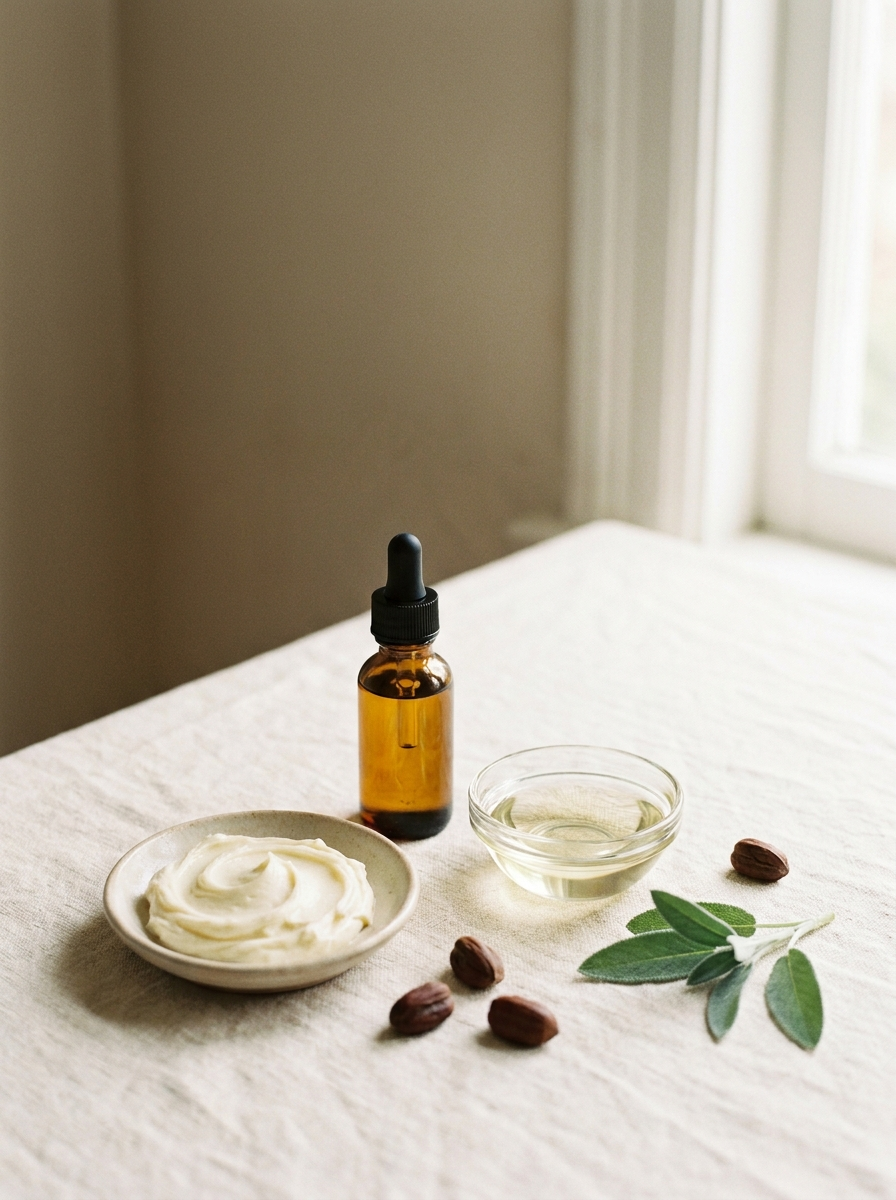
The plant-derived emollient palette is huge and wonderfully varied — from butters you could almost stand a spoon in to esters as light as air. Here are five worth knowing, and how to use them well.
Emollient, occlusive, or humectant? These jobs overlap but aren't the same. Humectants (see our humectant guide) draw in water. Occlusives form a barrier that slows water loss. Emollients soften and smooth the skin surface. Many ingredients do more than one — shea butter is both emollient and occlusive — but keeping the three roles in mind is the key to building a moisturiser that actually works.
1. Jojoba Oil
INCI: Simmondsia Chinensis Seed Oil
Type: Emollient (liquid wax ester) · Typical use: 3–30% (up to 100% in pure facial oils) · ✅ COSMOS-approved
Technically not an oil at all but a liquid wax ester, jojoba is remarkably close in structure to human sebum — which is why it absorbs cleanly, suits most skin types, and rarely feels greasy. Unlike triglyceride oils, jojoba's wax ester structure — predominantly monounsaturated fatty acids and alcohols — is inherently more resistant to hydrolysis and oxidative degradation than polyunsaturated triglyceride oils. This is precisely why jojoba is so exceptionally stable and long-lived on the shelf, making it a formulator's favourite for facial oils and lightweight creams.
- Loves: facial oils, serums, lightweight creams; anywhere you want a non-greasy, skin-familiar feel.
- Watch: cost is higher than commodity oils. Genuinely versatile, with very few downsides.
2. Squalane
INCI: Squalane
Type: Emollient (hydrocarbon) · Typical use: 1–10% · ✅ COSMOS-approved (verify plant-derived grade)
Your skin naturally produces squalene — an unsaturated hydrocarbon and a key component of sebum. Squalane is its hydrogenated, saturated cousin: the hydrogenation removes the double bonds that make squalene unstable, giving squalane its signature silky elegance and excellent shelf stability whilst retaining full skin compatibility. The result is the modern "everyone loves it" emollient: lightweight, generally regarded as non-comedogenic, and beautifully stable.
Once sourced from shark liver, the plant-derived versions from olive or sugarcane are now standard and are what you want for a sustainable, cruelty-free formula. The sugarcane route is particularly compelling from a green chemistry perspective — it proceeds via fermentation of farnesene, which is then hydrogenated to squalane, making it a genuinely renewable, low-impact raw material. It's worth noting that whilst olive-derived squalane is perfectly acceptable, the sugarcane route generally carries a lighter environmental footprint — olive cultivation is comparatively land- and water-intensive, which is worth factoring in if you're building a rigorous sustainability story.
- Loves: facial serums, gel-creams, "weightless" moisturisers; a superb silicone-feel alternative.
- Watch: confirm your grade is olive- or sugarcane-derived (not shark). Sugarcane-derived is a strong sustainability story worth telling on pack.
3. Shea Butter
INCI: Vitellaria Paradoxa Seed Butter (formerly Butyrospermum Parkii Butter)
Type: Emollient + occlusive · Typical use: 1–15% in emulsions (up to 30–100% in anhydrous balms) · ✅ COSMOS-approved
The rich, cushioning classic. Shea is both emollient and mildly occlusive, and it carries a notably high unsaponifiable fraction — typically 5–11%, compared to 1% or less in most vegetable oils. This fraction includes triterpene alcohols (notably lupeol and butyrospermol), tocopherols, and phytosterols, which together underpin shea's well-earned reputation for soothing and barrier support. It's the backbone of body butters, rich creams, and balms.
Note that the INCI name has been updated in recent editions of the INCI dictionary to Vitellaria Paradoxa Seed Butter — you may still see the former name Butyrospermum Parkii Butter on older supplier documentation and product labels, but it's worth updating to the current name for regulatory accuracy.
- Loves: body butters, rich creams, lip and cuticle balms, after-sun.
- Watch: can feel heavy or "waxy" and may leave a film if overused in facial products. Shea is also prone to graininess if not handled carefully — this occurs because the different triglyceride fractions present in shea re-crystallise at different rates on cooling. To avoid it, melt the butter fully and cool rapidly (with stirring if possible), which encourages a uniform crystal structure. Look for fair-trade or ethically sourced shea — it's a strong brand story and directly supports West African producer communities.
4. Coco-Caprylate/Caprate
INCI: Coco-Caprylate/Caprate (or Coco-Caprylate for the C8-only grade)
Type: Emollient (natural ester) · Typical use: 2–15% · ✅ COSMOS-approved (verify grade/sourcing)
A natural "dry-touch" ester and one of the most popular silicone alternatives — a plant-derived stand-in for the slip and glide of dimethicone. It's worth knowing that these are two related but distinct materials: Coco-Caprylate is the C8-only ester, whilst Coco-Caprylate/Caprate is the more commonly encountered C8/C10 blend — you may see both on supplier lists, so check your specification sheet. Both give a light, fast-absorbing, velvety finish without greasiness, making them brilliant for modern, elegant textures.
Coco-Caprylate/Caprate is also a particularly useful ingredient in mineral sunscreen formulations, where it helps disperse zinc oxide and significantly improves the cosmetic elegance of what can otherwise be a chalky, draggy texture.
- Loves: facial moisturisers, primers, mineral sunscreens, hair serums; anywhere you'd have reached for a silicone.
- Watch: derived from coconut and/or palm — if palm-free or certified-sustainable sourcing matters to your brand, ask your supplier for RSPO documentation or a palm-free grade.
5. Caprylic/Capric Triglyceride
INCI: Caprylic/Capric Triglyceride
Type: Emollient (light spreading ester) · Typical use: 2–20% · ✅ COSMOS-approved (verify sourcing)
Sometimes loosely referred to as "fractionated coconut oil" in consumer-facing contexts — though the two are technically distinct. Fractionated coconut oil is produced by separating the liquid triglyceride fractions of coconut oil, whilst Caprylic/Capric Triglyceride is more specifically the C8/C10 triglyceride produced by esterification of glycerin with caprylic and capric fatty acids derived from coconut or palm kernel oil. They share a similar source, light texture, and formulation role, but are not identical materials. It's also worth noting that the glycerin used in this esterification is frequently a co-product of biodiesel or soap manufacture — a pleasing circular economy footnote that's worth sharing with sustainability-conscious customers.
What's not in dispute is its performance: colourless, odourless, non-greasy, exceptionally stable, and a superb carrier for oil-soluble actives and fragrances. If you only stock one versatile emollient base, this is a strong candidate.
- Loves: almost anything — lotions, creams, serums, cleansing oils, makeup; excellent as a carrier for actives and fragrance.
- Watch: typically derived from coconut and/or palm kernel oil. As with coco-caprylate, request RSPO-certified or palm-free grades if sustainable sourcing is central to your brand promise.
Honourable Mentions
- Cetearyl Alcohol (INCI: Cetearyl Alcohol) — a blend of cetyl alcohol (C16) and stearyl alcohol (C18) fatty alcohols that acts as an emollient and a thickener/co-emulsifier, giving body and a cushiony skin feel to creams and lotions. When the two components are present in a formula independently rather than as a pre-blended raw material, you may see them listed as two separate INCI entries — Cetyl Alcohol and Stearyl Alcohol — which can cause confusion. Not to be confused with drying alcohols — fatty alcohols are conditioning and skin-compatible. Often palm-derived; check sourcing.
- Isoamyl Laurate (INCI: Isoamyl Laurate) — a lightweight, readily biodegradable natural ester with a soft, dry finish; another excellent silicone alternative and well worth a place in your emollient toolkit.
- Sunflower & other carrier oils (e.g. INCI: Helianthus Annuus Seed Oil) — affordable, skin-friendly, and high in linoleic acid; just note they are more prone to oxidation than more saturated oils, so protect them with an antioxidant (see below).
A Few Honest Formulating Truths
Emollients carry your product's sensory signature
Two creams with identical actives can feel completely different depending on the emollient blend. Consider building a "sensory ladder" — a light dry-touch ester (coco-caprylate, squalane) for initial slip, a medium oil (jojoba, caprylic/capric triglyceride) for cushion, and a butter (shea) for richness — and adjust the ratios to hit the skin feel you want.
Palm sourcing is a real and growing concern
Several excellent emollients — caprylic/capric triglyceride, coco-caprylate, cetearyl alcohol — are commonly palm- or palm kernel-derived. "Natural" doesn't mean "deforestation-free." If sustainability is central to your brand, ask suppliers directly for RSPO certification, mass-balance documentation, or explicitly palm-free grades — and be honest in your marketing about what you can and can't verify.
Protect your oils from going rancid
Unsaturated plant oils — sunflower, rosehip, hemp, and many others — are rich in polyunsaturated fatty acids, which is great for skin but means they oxidise over time, developing off-odours, colour changes, and loss of performance. To protect them, add Tocopherol (Vitamin E) at 0.1–0.5% in the oil phase — but avoid going higher, as tocopherol can paradoxically become pro-oxidant at elevated concentrations, which is a trap that catches many new formulators out.
For broader antioxidant coverage, a rosemary antioxidant extract is an excellent natural companion to tocopherol. Look for preparations standardised for antioxidant activity — typically standardised for carnosic acid, carnosol, or rosmarinic acid content — rather than a generic rosemary botanical extract, which may have little meaningful antioxidant potency. Suppliers should be able to provide an activity specification; if they can't, look elsewhere. The INCI will typically appear as Rosmarinus Officinalis Leaf Extract, but the active fraction and standardisation level is what matters in practice.
One important reminder: an antioxidant is not a preservative. It protects your oils from oxidative rancidity — it does nothing to inhibit microbial growth. Anything containing water still needs a properly validated preservative system. See our guide to preservatives for more on this.
A note on comedogenicity
Some richer emollients may feel too heavy or contribute to congestion for oily or acne-prone skin types, and lighter esters (coco-caprylate, squalane) are generally safer bets for facial formulas targeting those concerns. That said, it's worth knowing that traditional comedogenicity ratings — widely cited across beauty content — are largely derived from rabbit ear assays, which have limited predictive validity for human skin in finished formulations. Concentration in the formula, the overall formulation matrix, skin microbiome, and individual physiology all play a far greater role than a raw ingredient's standalone rating. Treat comedogenicity scores as a loose guide, not a rule — and always recommend patch testing.
Choosing emollients for different skin types
The emollient blend that works beautifully in a rich body butter may be entirely wrong for a lightweight facial serum — and what suits dry, mature skin can feel suffocating on oily or acne-prone skin. As a starting point:
- Oily or acne-prone skin: favour lighter esters — squalane, coco-caprylate, isoamyl laurate — at modest concentrations. Keep the overall oil phase lean and prioritise dry-touch finishes.
- Dry or mature skin: lean into richer butters and oils — shea at higher levels, jojoba, caprylic/capric triglyceride — alongside a well-chosen occlusive to seal moisture in.
- Sensitive or barrier-compromised skin: skin-identical and skin-compatible emollients are the safest starting point. Squalane and jojoba are both well-tolerated, structurally familiar to the skin, and unlikely to provoke reaction. Avoid heavily fragranced or complex oil blends until the barrier is restored.
- Normal or combination skin: this is where the sensory ladder approach comes into its own — blend a light ester for the initial feel with a medium carrier oil for cushion, and adjust ratios until the texture is exactly where you want it.
These are starting points, not rules. Skin is individual, formulation matrices vary enormously, and what matters most is how the finished formula performs in use — which is why consumer patch testing and in-use trials remain invaluable, however well you know your ingredients.
Emollients alone don't hydrate
This is worth saying plainly: emollients soften and smooth, but they don't add water to the skin. A complete moisturiser pairs emollients with humectants (which attract and bind water) and usually an occlusive (which slows transepidermal water loss and seals everything in). The three categories work as a team — and understanding how to balance them is the foundation of effective moisturiser formulation.
Quick Reference Table
| Emollient | INCI | Type | Typical Use Level | Skin Feel | COSMOS |
|---|---|---|---|---|---|
| Jojoba Oil | Simmondsia Chinensis Seed Oil | Liquid wax ester | 3–30% (up to 100% in facial oils) | Light, skin-familiar, exceptionally stable | ✅ |
| Squalane | Squalane | Saturated hydrocarbon | 1–10% | Silky, weightless, generally regarded as non-comedogenic | ✅* |
| Shea Butter | Vitellaria Paradoxa Seed Butter | Emollient + occlusive | 1–15% (up to 30–100% in anhydrous balms) | Rich, cushioning | ✅ |
| Coco-Caprylate/Caprate | Coco-Caprylate/Caprate | Natural ester | 2–15% | Dry-touch, silicone-like slip | ✅* |
| Caprylic/Capric Triglyceride | Caprylic/Capric Triglyceride | Light spreading ester | 2–20% | Light, silky, versatile | ✅* |
*Verify sourcing and grade with your supplier — squalane should be plant-derived (olive or sugarcane); coconut/palm-derived esters should carry RSPO certification, mass-balance documentation, or an explicitly palm-free grade.
This article is educational and is not a substitute for the manufacturer's technical data sheet, your own stability and safety testing, or a qualified cosmetic safety assessor's review. Always verify use levels, processing conditions, and regulatory or certification status against the supplier's current documentation and the applicable regulations for your target market.
Formulate smarter, naturally.
Your AI cosmetic chemist and sustainable formulation workspace.
Try Formulab AI