10 July 2026
Top 5 Preservatives for Natural & COSMOS-Friendly Formulation
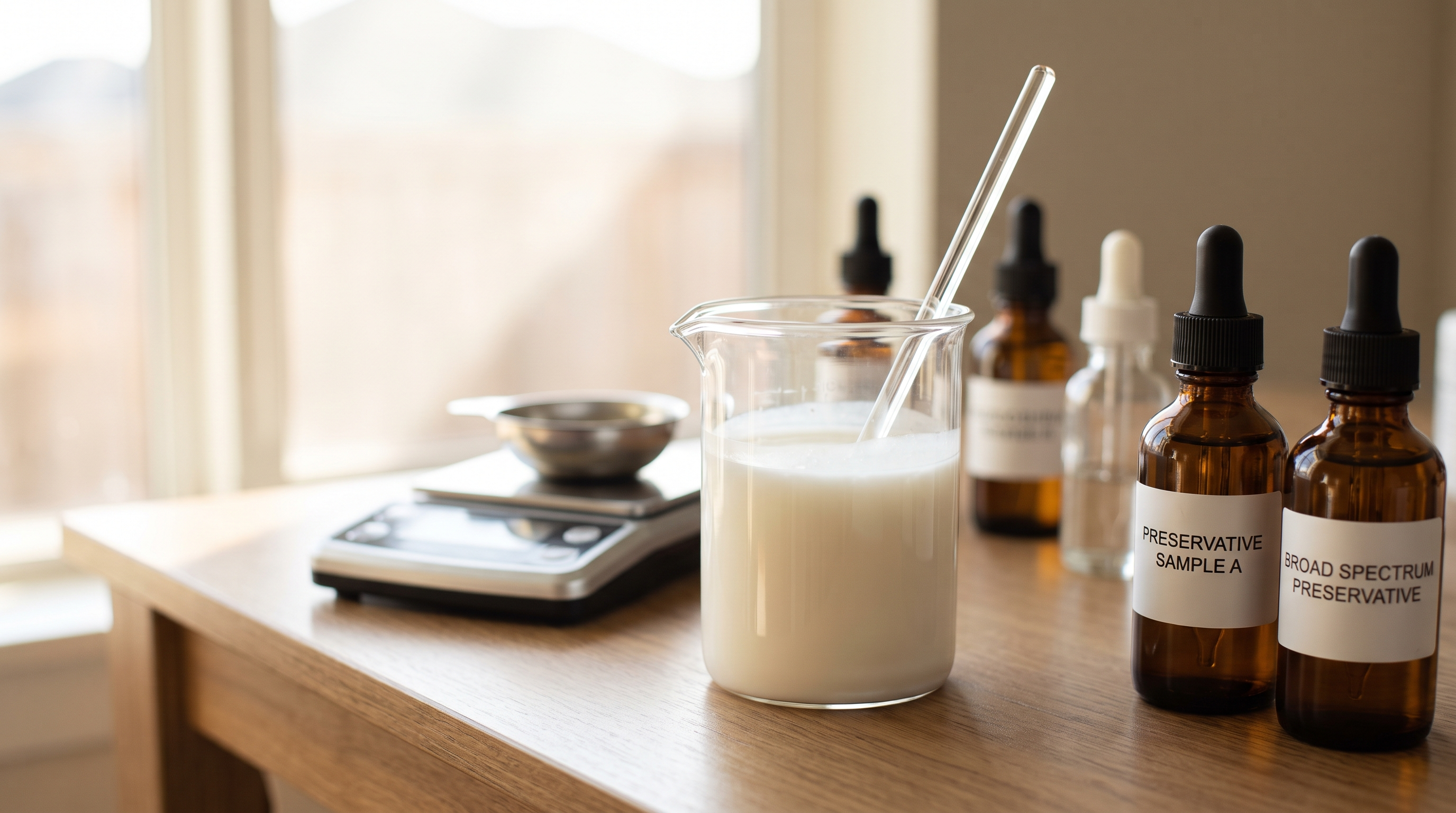
Preservation is the single most important — and most misunderstood — part of natural formulation. Get it wrong and your beautiful cream becomes a microbial soup; get it too aggressive and you undermine the gentle, sustainable ethos you're formulating for.
The challenge? "Natural" and "broad-spectrum preservation" don't always sit comfortably together. The good news is that the COSMOS standard permits a defined list of effective preservatives, so you don't have to choose between compliance and a product that's actually safe on the shelf.
Here are five reliable, sustainable, COSMOS-friendly preservative systems — and how to get the best from each.
First, the golden rules 🧪
No preservative works in isolation. Before you pick one:
- Preserve anything with water. If your formula contains water (or hydrosols, aloe, botanical extracts), it needs a preservative — full stop.
- Mind your pH. Most natural preservatives are organic acids that only work in their active (undissociated) form at lower pH. This makes or breaks their efficacy.
- Consider your packaging. An airless pump presents a very different microbial challenge to an open jar. Container design is part of your preservation strategy, not an afterthought.
- Support your system. Chelators (e.g. sodium phytate), low water activity, and good manufacturing hygiene all reduce the burden on your preservative.
- Always run Preservative Efficacy Testing (PET, ISO 11930). A preservative that works in one formula may fail in another. Testing is the only way to know.
1. Gluconolactone & Sodium Benzoate ✅ COSMOS-approved
INCI: Gluconolactone, Sodium Benzoate, Calcium Gluconate Example trade names: Geogard Ultra, Cosphaderm GSB
A firm favourite for good reason: gentle, well-tolerated, and effective across a broad range of products. The gluconolactone also acts as a mild humectant and chelator, giving you a small formulation bonus.
- Typical use level: ~0.75–1.2%
- pH range: best below ~5.5–6.0
- Best for: leave-on creams, lotions, gels
- Watch-out: can be a little weaker against moulds/yeasts in tricky formulas — support with good pH management and a chelator.
2. Benzyl Alcohol, Salicylic Acid, Glycerin & Sorbic Acid ✅ COSMOS-approved*
INCI: Benzyl Alcohol, Salicylic Acid, Glycerin, Sorbic Acid Example trade names: Preservative Eco, Euxyl K 903
A broad-spectrum liquid that's genuinely easy to work with — it disperses well and covers bacteria, yeast and mould. A brilliant "all-rounder" for beginners and pros alike.
- Typical use level: ~1%
- pH range: works up to ~6.0
- Best for: most emulsions, cleansers, toners
- Watch-out: benzyl alcohol is classified as an EU Annex III fragrance allergen and must be declared on-pack in leave-on products above 0.001% and rinse-off products above 0.01%. At typical preservative use levels it is generally compliant, but exercise additional caution for sensitive skin or baby formulations. The benzyl alcohol can also carry a faint scent; factor this into delicate fragrance work.
*Salicylic acid is permitted as a preservative under COSMOS, but always confirm current use restrictions against the latest COSMOS Permitted Ingredients list and your certifier's guidance.
3. Sodium Benzoate & Potassium Sorbate ✅ COSMOS-approved
INCI: Sodium Benzoate, Potassium Sorbate Example trade names: available as individual raw materials from most cosmetic ingredient suppliers
The classic organic-acid duo — inexpensive, naturally-derived, and effective if you respect the pH.
- Typical use level: ~0.5–1% combined
- pH range: ideally ≤ 5.0; absolute maximum 5.5. Note that potassium sorbate has a pKa of ~4.76, meaning meaningful antimicrobial activity requires a genuinely low pH — don't push your luck above 5.0.
- Best for: low-pH toners, mists, gels, cleansers
- Watch-out: relatively weak against some Gram-negative bacteria and moulds on its own — best in well-designed, genuinely low-pH systems, and often paired with a chelator or booster such as sodium phytate.
4. Dehydroacetic Acid & Benzyl Alcohol ✅ COSMOS-approved*
INCI: Dehydroacetic Acid, Benzyl Alcohol Example trade names: Geogard 221, Cosphaderm DBA
A robust, broad-spectrum liquid that tolerates a slightly higher pH than the pure organic-acid systems — handy when your formula won't sit comfortably below 5.5.
- Typical use level: ~0.6–1%
- pH range: effective up to ~6.0–6.5; performance above pH 6.0 should always be confirmed by PET
- Best for: emulsions where a moderately higher pH is unavoidable
- Watch-out: benzyl alcohol is a declared EU Annex III fragrance allergen (see entry 2 above). Always confirm current maximum use levels, COSMOS status, and any restrictions on your supplier's current TDS — dehydroacetic acid's status has been subject to discussion across some certifiers, so verify against the latest permitted ingredients list.
*Confirm current COSMOS-permitted status with your certifier, as restrictions on dehydroacetic acid can vary.
5. Levulinic Acid & Sodium Levulinate ✅ COSMOS-approved
INCI: Levulinic Acid, Sodium Levulinate Example trade name: Dermosoft 700
A mild, multifunctional option that can be produced from renewable lignocellulosic biomass, with a soft skin feel and light deodorising properties. Increasingly popular for "clean" positioning.
- Typical use level: ~2–4%
- pH range: below ~5.5
- Best for: gentle leave-on products, deodorants
- Watch-out: modest strength as a sole preservative — it shines when paired (e.g. with glyceryl caprylate or an anisic-acid blend) and validated by testing. The "renewable" origin claim varies by supplier route; always request origin documentation to support any green positioning.
Quick comparison
| System | INCI (key components) | COSMOS | Broad spectrum | pH ceiling | Notes |
|---|---|---|---|---|---|
| Gluconolactone & Sodium Benzoate | Gluconolactone, Sodium Benzoate, Calcium Gluconate | ✅ | Good | ~6.0 | Gentle; chelating bonus |
| Benzyl Alcohol blend | Benzyl Alcohol, Salicylic Acid, Glycerin, Sorbic Acid | ✅* | Broad | ~6.0 | Allergen declaration required |
| Sodium Benzoate & Potassium Sorbate | Sodium Benzoate, Potassium Sorbate | ✅ | Moderate | 5.0–5.5 | pH-critical; pair with chelator |
| Dehydroacetic Acid & Benzyl Alcohol | Dehydroacetic Acid, Benzyl Alcohol | ✅* | Broad | ~6.0–6.5 | Allergen declaration required; verify status |
| Levulinic Acid & Sodium Levulinate | Levulinic Acid, Sodium Levulinate | ✅ | Mild | ~5.5 | Best used in combination |
*Confirm current status with your certifier
The formulator's takeaway
There's no single "best" natural preservative — the right choice depends on your pH, product type, packaging and water activity. Start with a system suited to your formula, support it with good design (low pH, a chelator, clean manufacturing, and appropriate packaging), and prove it works with challenge testing.
Preservation isn't the glamorous part of formulating — but it's the part that keeps your customers safe. Get it right, and everything else you've crafted can shine. 🌿
This article is for educational guidance only and is not a formal safety assessment. Always refer to your supplier's current technical data sheet, confirm COSMOS-permitted status against the latest COSMOS Permitted Ingredients list and your certifier's guidance, and validate any preservative system with Preservative Efficacy Testing (ISO 11930) before bringing a product to market.
Formulate smarter, naturally.
Your AI cosmetic chemist and sustainable formulation workspace.
Try Formulab AI